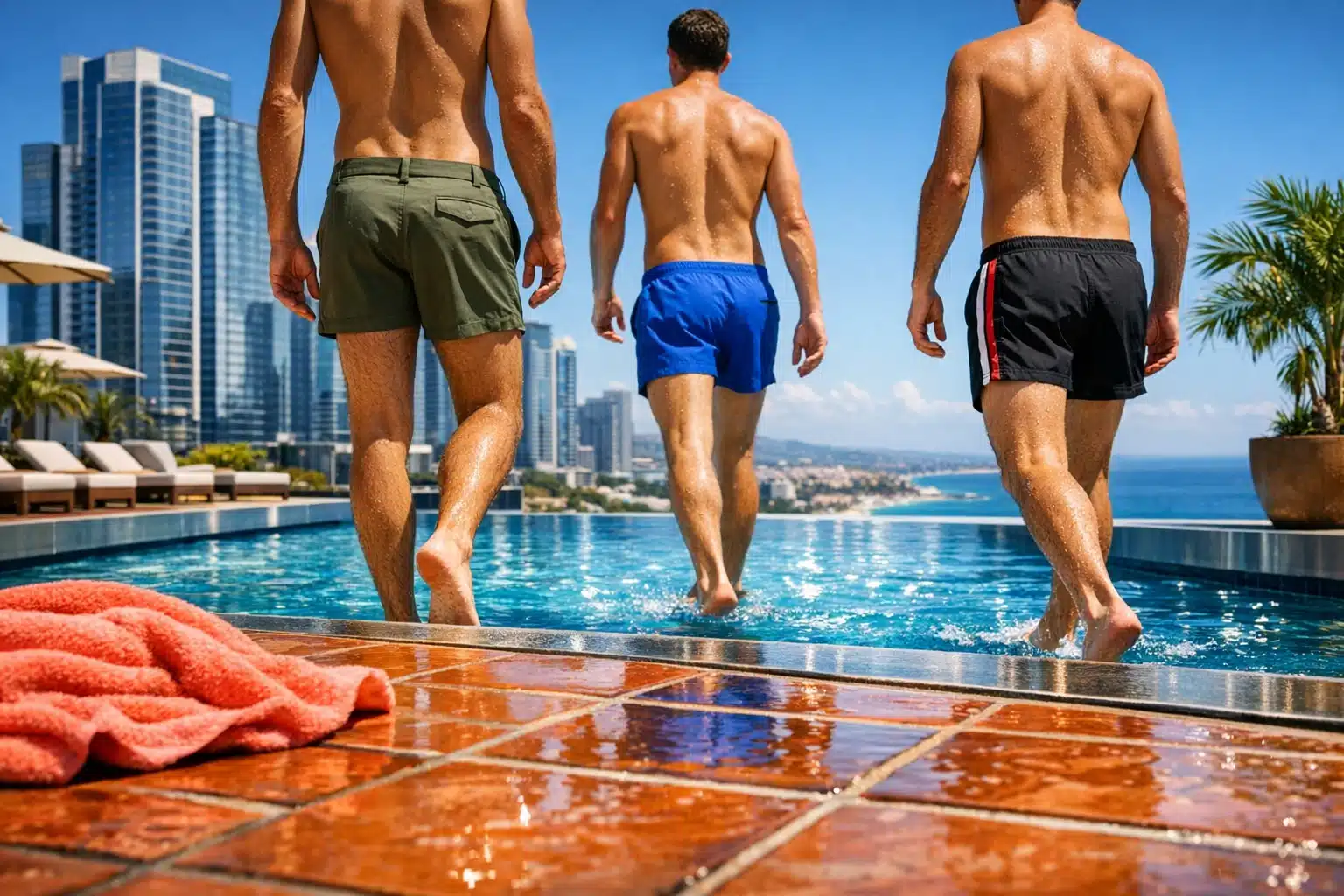
 Artificially generated image
 Hot Men’s Swimwear Trends 2026: Confidence You Can See
Men’s swimwear in 2026 is doing more than covering a day at the beach; it is shaping how style, comfort, and confidence meet in public. Designers are refining fit, fabrics, and color stories to suit real bodies and real movement. This matters because shoppers now expect pieces that look sharp, dry quickly, and last beyond one season. From tailored shorts to sport-driven briefs, the new wave is practical, expressive, and easier to wear than ever.
Article Outline
This article explores the main forces shaping men’s swimwear in 2026, moving from silhouette and fit to color, fabric, function, and smart buying decisions.
- The shift toward cleaner, better-proportioned swim silhouettes
- How color, prints, and texture are updating beach style
- Why fabric technology and construction now matter as much as appearance
- Ways to choose a trend that works for different builds, comfort levels, and routines
- How to shop strategically and build a swimwear lineup that feels modern without being wasteful
1. The New Swim Silhouette: Shorter Lengths, Cleaner Lines, Better Balance
The biggest visual change in men’s swimwear for 2026 is not a wild print or a novelty cut. It is proportion. The market is moving toward shorter, neater, more considered shapes that frame the body without feeling theatrical. For years, oversized board shorts dominated casual beachwear, especially in places where surf culture heavily influenced mainstream fashion. Now that look is giving way to trunks and swim shorts that sit higher on the thigh, taper more naturally, and create a sharper outline. In practical terms, the sweet spot for many brands is between a 5-inch and 7-inch inseam. That range works because it offers mobility, dries fast, and looks polished on a wide variety of heights.
Tailored swim shorts are especially important in 2026 because men are asking more from a single garment. A pair of trunks may need to handle a morning swim, lunch at a seaside café, and a walk back through town without looking sloppy. That is why details such as flat waistbands, subtle side adjusters, hidden drawcords, and cleaner pocket placement are becoming more common. These features make swimwear look less like gym kit and more like part of a summer wardrobe. A good pair of shorts should feel less like a costume and more like your warm-weather uniform.
At the same time, more fitted categories are gaining visibility. Swim briefs and square-cut trunks are no longer niche items reserved only for competitive swimmers or European resorts. They are being reintroduced through better fabric, richer colors, and smarter branding. Many men who once avoided them are reconsidering because the modern versions are more supportive, less flashy, and easier to wear with confidence. The mood is athletic rather than aggressive.
-
Tailored trunks suit men who want versatility and a clean everyday look.
-
Shorter swim shorts create a sportier line and work well for active beach days.
-
Square-cut styles offer more support than loose trunks and more coverage than briefs.
-
Briefs appeal to confident swimmers who prioritize freedom of movement and minimal drag.
The real trend is not about showing more skin for the sake of it. It is about wearing a cut that makes visual sense. When the hem, rise, and waistband are proportioned correctly, the whole look becomes calmer, stronger, and far more modern.
2. Color, Print, and Texture: The 2026 Visual Language of Swim Style
If silhouette sets the structure, color and surface design create the mood. Men’s swimwear in 2026 is moving away from chaotic, logo-heavy, attention-seeking graphics and toward a more intentional visual palette. That does not mean everything is plain. It means the choices feel edited. Designers are working with tones that look sophisticated in natural light and still feel relaxed enough for the beach. Earthy neutrals, sea-inspired blues, sun-faded reds, and citrus accents are all appearing, often with matte finishes that soften the overall impression.
One of the most interesting developments is the rise of color stories that suggest travel without leaning into cliché. Instead of oversized tropical florals on every rack, there is more use of vertical stripes, geometric tiling, retro sport bands, watercolor-like gradients, and abstract wave patterns. These designs carry personality without overwhelming the wearer. In many cases, the print is confined to a panel, a side stripe, or a tonal pattern woven into the fabric rather than blasted across the entire garment. That restraint is part of what makes the 2026 look feel current.
-
Deep olive, clay, navy, and espresso are strong choices for men who prefer understated style.
-
Cobalt, saffron, coral, and aqua bring energy without looking juvenile when the cut stays clean.
-
Retro stripes and geometric motifs feel fresher than novelty prints and are easier to pair with summer basics.
-
Textured fabrics such as crinkle finishes or subtle seersucker effects add interest even in solid colors.
Texture deserves more attention because it is shaping how premium swimwear looks in 2026. Flat, shiny fabric can sometimes feel dated, especially when combined with bright color. In contrast, softly brushed surfaces, lightly ribbed textiles, and dry-touch matte weaves create depth and richness. They also photograph better and tend to look more expensive. A textured trunk in dark green or rust can stand out more elegantly than a loud tropical print, which says a lot about where the market is headed.
There is also a practical side to these visual trends. Color affects wearability. Mid-tone shades often hide water marks and creasing better than pale pastels, while darker hues can retain a slimmer visual line. Pattern placement can broaden or streamline the body depending on scale and direction. A vertical stripe may lengthen the leg visually, while a chunky all-over print can make a short trunk feel bulky. In other words, design is no longer just decoration. It has become part of how swimwear supports presence, ease, and self-assurance under a very honest kind of lighting: midday sun.
3. Fabric Technology and Construction: Why Performance Now Defines Premium Swimwear
Behind the visual trends, the real engine of men’s swimwear in 2026 is material innovation. Buyers are far more informed than they were a decade ago, and many now look past color first to ask better questions: Does this dry quickly? Will the waistband stay comfortable after an hour? Is the lining supportive or scratchy? Can the fabric hold shape after repeated exposure to salt, chlorine, and sun? Those questions are reshaping what brands make, and the best products answer them with thoughtful construction rather than marketing slogans.
Most strong swimwear collections now rely on technical blends built around nylon or polyester with elastane for stretch. Recycled fibers are increasingly common, especially in mid-range and premium lines, though smart shoppers still know that sustainability claims should be backed by durability. A recycled fabric that loses its shape after one season is not a strong value. What matters is a balance of environmental improvement and long-term wear. In practical use, fabrics with moderate stretch tend to feel secure without becoming clingy, and lighter weaves usually dry faster than heavier hybrid materials.
Lining is another area where 2026 swimwear is noticeably better. Traditional full mesh linings still exist, but many men prefer boxer-brief style inner supports or targeted compression panels. These feel smoother against the skin, reduce chafing, and make shorter cuts easier to wear. Some brands are also refining seam placement so that sensitive areas experience less friction during walking, swimming, or sports. These are small details on paper, yet they make a major difference after a full afternoon in the sun.
-
Quick-dry shells help reduce discomfort between swimming and social settings.
-
Four-way stretch improves movement during beach games, paddle sports, and pool laps.
-
UPF-rated fabrics add sun protection, especially useful for long outdoor sessions.
-
Chlorine-resistant construction matters for frequent pool users, not just vacation wear.
-
Zippered or mesh-drain pockets are useful, but bulky cargo styling is falling out of favor.
Construction quality also influences how polished a swimsuit appears. Bonded hems, neat stitching, better elastic recovery, and flat finishes create a cleaner silhouette. Even the waistband is evolving. Instead of relying on thick exposed elastic, many 2026 styles combine a partially elastic back with a flat front, producing comfort and structure at once. The result is easy to notice: the short sits better, bunches less, and looks more intentional from every angle.
There is a quiet luxury to well-made swimwear. It is not always visible from across the beach, but the wearer feels it immediately. When a trunk stays light after a swim, dries on the way to lunch, and does not twist or sag by sunset, confidence stops being abstract. It becomes physical. That is why fabrication, once treated as a technical footnote, is now central to what makes men’s swimwear feel current in 2026.
4. Confidence, Fit, and Body Type: Choosing a Trend That Actually Works for You
Fashion coverage often talks about confidence as if it appears automatically when someone buys the right thing. In reality, confidence usually comes from fit, comfort, and context. Men’s swimwear in 2026 reflects that shift in thinking. The most useful trend is not a single cut or color. It is the idea that different silhouettes can work well when they match the wearer’s proportions, activity level, and personal comfort zone. A man does not need to force himself into a brief if he feels best in a mid-length trunk, and he does not need to hide in oversized shorts if a shorter inseam gives him a stronger shape.
For taller men, slightly shorter trunks can help balance long legs and keep the look modern. A 5-inch or 6-inch inseam often feels more proportional than an old-school knee-length short. Men with broader thighs may prefer a trunk with a slightly wider leg opening and a fabric that stretches without gripping too tightly. Slimmer builds often benefit from square-cut or tailored shorts with a clean waistband, because too much excess fabric can make the frame seem smaller. Athletic men who like lap swimming or active beach days may find that square-cut styles and supportive liners offer a useful middle ground between function and coverage.
There are also a few practical fit checks that matter more than trend reports.
-
The waistband should stay secure without requiring constant tightening.
-
The leg opening should allow movement without flaring out awkwardly.
-
The rise should feel natural when sitting, not overly low or restrictive.
-
The fabric should not turn transparent when wet.
-
The suit should still feel comfortable after walking, not just while standing in front of a mirror.
Styling plays a role as well. A well-chosen camp-collar shirt, linen overshirt, knitted polo, or simple tank can change how swimwear feels emotionally. When a swimsuit connects with the rest of a summer outfit, it stops feeling exposed and starts feeling integrated. That mental shift matters. Footwear, sunglasses, and a lightweight tote may sound secondary, yet they help frame the entire look. Beach style is often won or lost in the transition moments, not only in the water.
The wider message of 2026 is encouraging: there is more permission to choose what suits you rather than what a narrow fashion ideal demands. Think of swimwear the way you would think about a summer haircut or a good pair of sunglasses. The right choice should sharpen your features, simplify your day, and make you feel more like yourself. When that happens, confidence is not performed. It simply shows up.
5. Buying Smart in 2026: Building a Better Swimwear Wardrobe and Final Takeaway
For most men, the smartest approach to 2026 swimwear is not chasing every trend. It is building a small lineup that covers real situations. One pair may be best for active swimming, another for travel and resort wear, and a third for casual beach days when style matters a little more. This kind of rotation is practical because swimwear often performs better when it is not overused. It also helps men avoid the all-too-common problem of owning one flashy pair that looks good online but feels wrong everywhere else.
A sensible swimwear wardrobe can be surprisingly compact. Many readers only need:
-
One tailored solid-color trunk for broad versatility
-
One sport-oriented pair with better support for swimming or movement
-
One expressive option with stripe, texture, or pattern for holidays and social settings
Budget matters, of course, and the good news is that improvement in the market is not limited to luxury labels. Affordable brands are offering cleaner cuts and better fabrics than before, while premium brands justify higher prices mainly through finer materials, stronger construction, and more refined fit. When comparing options, shoppers should look beyond labels and ask concrete questions. Are the seams tidy? Does the waistband recover after stretching? Is the liner comfortable? Do pockets add utility or just bulk? Does the color still look rich when the fabric is wet? These checks tell you more than a glossy campaign image ever will.
Care also affects value. Rinsing swimwear after salt or chlorine exposure, avoiding rough hot washes, and drying it away from direct high heat can significantly extend its life. Good swim shorts are not invincible, but proper care helps preserve stretch, color, and shape. That matters even more now that many men expect a suit to perform across travel, exercise, and everyday summer wear.
For the target audience of this trend cycle, the takeaway is straightforward. Men’s swimwear in 2026 is less about spectacle and more about intelligent choice. The strongest options combine fit, movement, visual restraint, and enough personality to feel distinct without becoming costume-like. If you are shopping this season, start with your routine, your comfort level, and the environments where you will actually wear the piece. Choose proportion over hype, fabric over gimmicks, and confidence over imitation. When swimwear works with your body and your day, style becomes visible in the easiest possible way: it looks natural.