These Are the Top Male Intimate Devices People Are Choosing This Season
Talking about male intimate wellness is no longer a niche conversation hidden behind awkward jokes. More men now treat comfort, body awareness, sexual wellbeing, and hygiene as parts of ordinary self-care, so clear guidance has real value. Devices in this space range from simple manual designs to app-connected products, and those differences matter if you care about safety, fit, maintenance, privacy, and realistic expectations. A better understanding of the landscape helps buyers choose thoughtfully instead of relying on hype.
Before comparing products, it helps to separate curiosity from clutter. Some tools are built mainly for relaxation or solo exploration, some overlap with partnered intimacy, and a few sit close to medical territory. That distinction matters because the smartest purchase is usually the one that matches your comfort level, body needs, budget, and willingness to clean, store, and use the device responsibly.
Outline
- How male intimate wellness has broadened from novelty shopping into a category shaped by comfort, design, and practical self-care.
- The commonly discussed device types, including sleeves, external vibrators, ring-style products, prostate-focused tools, and vacuum-based options.
- How men’s personal health tools connect with intimate wellbeing through pelvic floor support, recovery, circulation awareness, and clinician-guided products.
- Why material quality, lubrication, hygiene, charging, and storage can matter as much as features or price.
- How to compare devices realistically and choose one that suits privacy needs, experience level, and everyday lifestyle.
1. Why Male Intimate Wellness Devices Are Getting More Attention
The market for male intimate wellness devices has changed because the conversation around men’s self-care has changed. A decade ago, these products were often framed as novelty items, hidden in dim corners of retail culture and discussed with a wink. Today, the tone is different. Shoppers increasingly want straightforward information about comfort, body-safe materials, quiet motors, easy cleaning, and whether a product fits into a broader routine of health and stress management. In other words, what used to be treated as a secret indulgence is now more often examined with the same practical mindset people bring to grooming tools, sleep aids, or recovery devices.
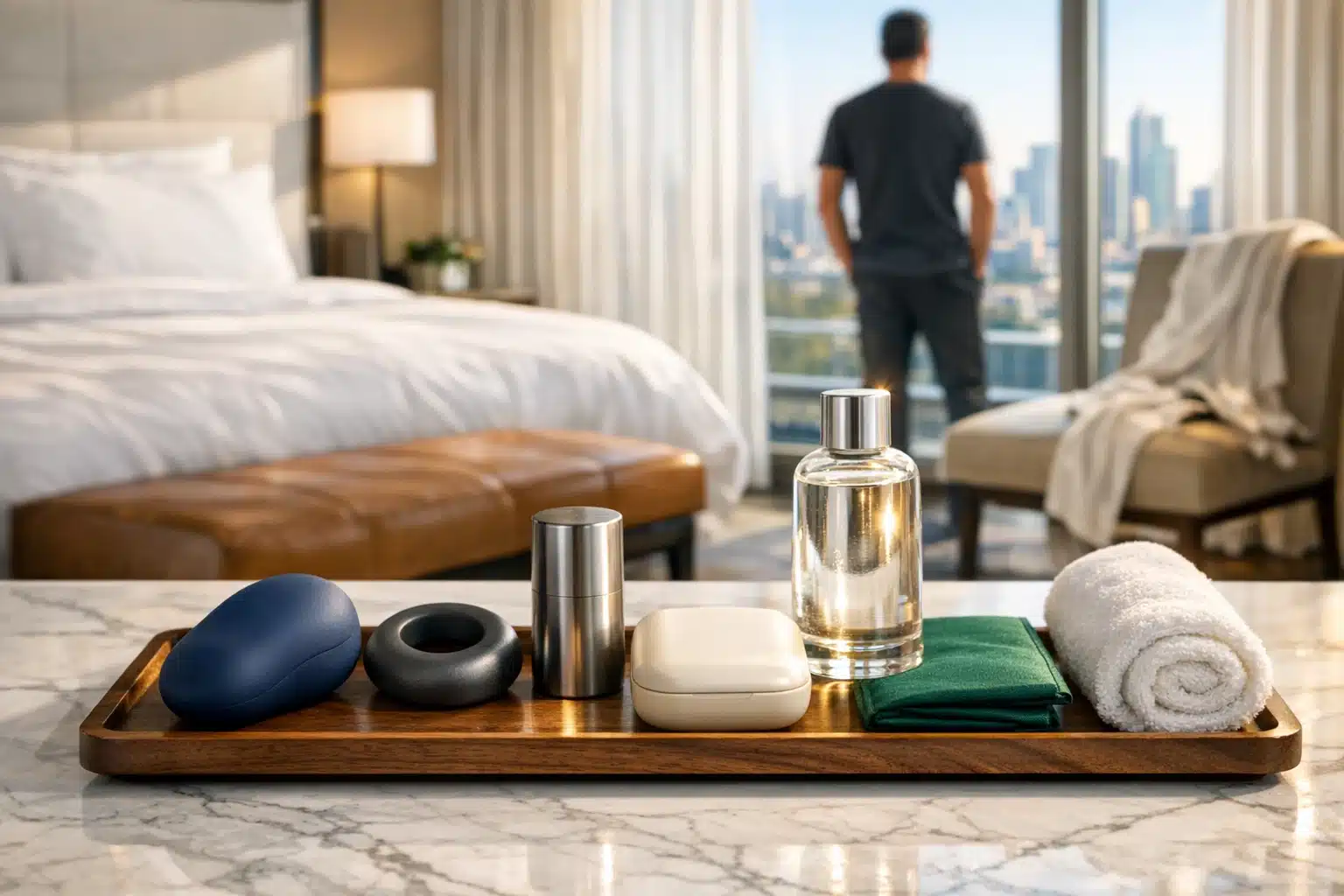
An overview of male intimate devices people are choosing this season, focusing on categories and general wellness considerations.
That overview matters because the category is broad. Men do not all shop for the same reason. Some are looking for relaxation after long workdays. Some want to add variety to solo intimacy. Others are interested in partnered use, discreet designs, or products that help them become more aware of comfort, tension, and stimulation preferences. There are also shoppers who are not looking for novelty at all; they want a product adjacent to medical support, such as a vacuum device discussed in urology settings or a pelvic floor training aid suggested by a specialist. Treating all of these goals as identical creates confusion.
A few clear trends explain current interest:
- Design has become more polished, with softer finishes and less intimidating shapes.
- USB charging and app-based control have made devices feel more like mainstream wellness tech.
- Body-safe silicone has become easier to find than in earlier years.
- Consumers are paying more attention to privacy, noise level, and cleanup time.
There is also a cultural shift at work. Men’s health conversations now more often include stress, sleep, pelvic tension, relationship communication, and sexual wellbeing as connected subjects rather than isolated ones. That broader lens encourages more thoughtful product research. The modern buyer is less likely to ask, “What is the most intense option?” and more likely to ask, “What fits my needs, feels safe, and is actually realistic for my routine?” That is a healthier starting point. It turns a crowded shelf into something closer to a map: still busy, still full of choices, but far easier to navigate when you know what problem you are actually trying to solve.
2. Commonly Discussed Intimate Device Types and How They Differ
When people talk about male intimate devices, they are usually referring to several distinct product types rather than one single class of item. Understanding those differences is the fastest way to shop intelligently. The category includes manual sleeves, powered strokers, external vibrators, ring-style devices, prostate-focused tools, and vacuum-based products. Each one creates a different experience, requires different care, and suits different levels of comfort or curiosity.
Manual sleeves are among the most common starting points. They usually rely on texture, grip, lubrication, and hand control rather than motors. Their appeal is simplicity. They can be more affordable, less noisy, and easier for beginners to understand. Powered strokers add motion, vibration, suction-like effects, or pattern settings. These models often attract shoppers who want less manual effort and more repeatable stimulation, but they can be bulkier, harder to clean, and more expensive.
External vibrators designed for male use have also become more visible. Some focus on the frenulum area, some provide broader external stimulation, and others are designed to be used with a partner. Their strength lies in versatility. A small motor can create a surprisingly different sensation profile than a sleeve, much like the difference between a brushstroke and a bass note in music. One is more focused; the other can feel wider and more rhythmic.
Ring-style devices are another commonly discussed option. These are usually chosen for fit, sensation, or partnered use. Comfort is essential here, because size matters more than many first-time buyers assume. A ring that is too tight or worn too long can cause discomfort, so product instructions and timing guidance should be taken seriously. For men exploring this category, gentler and more adjustable designs are usually a better first step than rigid or ultra-tight models.
Then there are prostate-oriented or perineal massagers, which sit in a different lane entirely. These products are not interchangeable with external sleeves or vibrators. Shape, base design, insertion safety, and material quality are much more important. Buyers considering this category should pay close attention to ergonomics and only choose products with a flared base where relevant.
Finally, vacuum-based erection devices occupy a medical-adjacent space. Some are marketed for wellness, others are used under clinical guidance. The distinction matters. Unlike a novelty item, a vacuum device may involve pressure control, duration limits, and more specific health considerations. Anyone dealing with pain, circulation issues, pelvic discomfort, or persistent erectile changes should treat that category as a health conversation first and a shopping conversation second.
3. Men’s Personal Health Tools and the Overlap With Intimate Wellbeing
The phrase men’s personal health tools covers more than products designed purely for pleasure. It includes devices and accessories that support comfort, recovery, circulation awareness, pelvic function, and hygiene. This overlap is important because intimate wellbeing rarely exists in isolation. Stress, sleep quality, medication effects, fitness habits, hydration, and pelvic tension can all shape how a person feels physically. A smart article on intimate devices therefore needs to look beyond the product box and ask a broader question: what role does this tool actually play in overall wellbeing?
One useful example is pelvic floor support. Although pelvic floor discussions are often framed around women’s health, men also have pelvic floor muscles, and those muscles can become weak, tense, or poorly coordinated. In clinical settings, pelvic floor therapy may be discussed for urinary symptoms, pelvic discomfort, or recovery after certain procedures. Some men use biofeedback-guided exercises or clinician-directed training tools as part of a health plan. These are not interchangeable with leisure products, but the categories sometimes sit near each other in online searches, so it is worth drawing a clean line between wellness curiosity and therapeutic use.
Vacuum erection devices provide another example of overlap. In some cases, these are sold as personal wellness products; in others, they appear in medical contexts, especially in discussions related to circulation support or post-treatment rehabilitation under professional guidance. That does not mean every shopper needs one, and it definitely does not mean self-diagnosis is wise. It simply shows that some tools live at the edge of health and intimacy rather than inside a purely recreational space.
Even everyday items can play a role in intimate wellbeing:
- Lubricants can improve comfort and reduce friction-related irritation.
- Toy cleaners and storage bags help maintain hygiene and material longevity.
- Trimmers, skin-friendly washes, and towels can support grooming and confidence.
- Warm compresses or massage tools may help some users relax before or after use.
There is also a psychological side to this topic. Men often receive mixed messages about performance, masculinity, and vulnerability. That can make it harder to seek information or admit uncertainty. Personal health tools can be helpful when they are used to support comfort and self-knowledge, not when they are treated like miracle fixes. If a man experiences ongoing pain, numbness, significant curvature changes, bleeding, persistent erectile difficulty, or urinary symptoms, the next step should be a clinician, not a bigger shopping cart. The best wellness mindset blends curiosity with caution and treats the body as something to understand rather than conquer.
4. Materials, Hygiene, Lubrication, and Safety Basics That Matter More Than Marketing
If the product page is all fireworks and no facts, step back. Material quality and maintenance are often more important than dramatic feature lists. For intimate devices, the safest starting point is usually body-safe, non-porous material such as quality silicone, stainless steel, borosilicate glass, or ABS plastic, depending on the product type. These materials are easier to clean than porous alternatives and generally hold up better over time. By contrast, mystery gels, low-grade rubbery compounds, or vague “soft touch” materials can make it harder to know what is actually in contact with the body.
Silicone is especially common because it is flexible, comfortable, and durable when made well. However, buyers should pay attention to lubrication compatibility. Many silicone products are best paired with water-based lubricant because some silicone-based lubricants can affect certain silicone surfaces. Stainless steel and glass offer different advantages: they are non-porous, easy to sanitize, and often useful for people who prefer firmness or temperature play within safe limits. ABS plastic can be a good option for hard-shell vibrators or devices with precise contours.
Cleaning should never be treated as an afterthought. A product that is easy to rinse, dry, and store is more likely to be used consistently and safely than one that feels like a weekend engineering project. Good care habits include:
- Cleaning before and after use according to manufacturer instructions.
- Drying completely before storage to reduce odor and moisture buildup.
- Keeping charging ports, sleeves, and seams free of trapped residue.
- Using individual storage bags so materials do not rub against each other.
Water resistance is another practical detail. Splashproof, water-resistant, and fully waterproof do not mean the same thing. If a product will be used in the shower or cleaned under running water, buyers should look for a clear ingress rating or specific care guidance instead of assuming every sealed-looking device can handle immersion.
Safety also includes fit and timing. Ring-style devices should not be used beyond recommended duration. Insertable items need appropriate design features for safe retrieval. Strong suction or pressure-based devices should be approached conservatively. Pain is a stop signal, not a challenge. In a market crowded with glossy claims, the most trustworthy products are often the ones that make fewer promises and provide better instructions. That is not boring; it is what real quality looks like when the lights are on and the packaging is out of the way.
5. How to Choose Wisely This Season: Privacy, Features, Budget, and a Practical Conclusion for Men
Choosing the right device is less about chasing the loudest trend and more about matching a product to real life. Start with three questions: What do you want it to do, how much maintenance are you willing to handle, and how private does the experience need to be? Those answers narrow the field quickly. A beginner in a shared apartment may care most about quiet operation, compact storage, and quick cleanup. Someone buying for partnered use may value remote control, flexible ergonomics, and easy communication around boundaries. A shopper with medical concerns may need clinician input before buying anything at all.
Feature comparison becomes easier when you group priorities instead of staring at a wall of specifications. Useful buying filters include:
- Noise level and whether the motor sounds discreet behind a closed door.
- Power source, including rechargeable batteries, charge time, and travel locks.
- Ease of cleaning, especially for textured interiors or multi-part designs.
- Material transparency, warranty terms, and clear care instructions.
- App privacy policies if the device connects to a phone.
Budget matters too, but price should be interpreted carefully. The cheapest product is not always the best value if it uses questionable material, lacks charging reliability, or becomes annoying to maintain. At the same time, the most expensive option is not automatically the most suitable. Many men do better with a modest, well-made device that fits their habits than with an advanced model loaded with features they never use. Think of it like buying kitchen gear: the tool that leaves the drawer is often more useful than the flashy machine that lives in a box.
For readers exploring this topic now, the practical takeaway is simple. Look for body-safe construction, honest instructions, and a design that suits your comfort level instead of trying to impress an imaginary audience. Treat intimate wellness as one part of broader self-care, not as a test of masculinity or a cure-all for every concern. If a device adds comfort, variety, or better self-awareness, it may be worth considering. If your body is signaling pain, numbness, or persistent dysfunction, step out of the shopping mindset and into a medical conversation. The best choice this season is not the trendiest device on a headline; it is the one that respects your health, your privacy, and the way you actually live.