These Are the Top Male Intimate Devices People Are Choosing This Season
For many men, intimate wellness sits at the crossroads of curiosity, comfort, and practical self-care, yet the shopping language around it can feel either too clinical or too vague. A good guide should lower the temperature, explain the terminology, and separate useful features from flashy distractions. This article looks at how these devices are commonly grouped, what health-oriented tools belong in the same conversation, and which buying factors deserve real attention before anyone clicks add to cart.
Outline
- The role of intimate wellness in modern male self-care
- Common device categories and how they differ in purpose and design
- Related personal health tools that support hygiene, comfort, and recovery
- Important comparisons involving materials, maintenance, charging, privacy, and budget
- A practical conclusion for readers who want a calm, informed starting point
Understanding the Landscape of Male Intimate Wellness
Male intimate wellness is no longer treated only as a niche retail corner or a whisper-filled joke category. Over the past several years, it has moved closer to mainstream personal care, partly because consumers have become more comfortable discussing stress, sleep, pelvic health, body confidence, and relationship communication as connected parts of overall wellbeing. That shift matters. When a topic is framed as wellness rather than embarrassment, buyers are more likely to compare materials, build quality, hygiene standards, and realistic use cases instead of rushing toward whatever product looks loudest on a screen.
One useful entry point is this phrase: An overview of male intimate devices people are choosing this season, focusing on categories and general wellness considerations. That line captures the most sensible way to approach the subject. Categories help readers understand what a device is designed to do, while wellness considerations help them decide whether that design matches their lifestyle, physical comfort, privacy needs, and maintenance habits.
In practical terms, shoppers usually care about a few recurring questions. Is a product intended for simple external stimulation, more automated use, or therapeutic support? Is it rechargeable or battery powered? Can it be cleaned easily? Is it compact enough for discreet storage? These questions sound basic, but they are often more useful than flashy marketing claims. A well-made product with body-safe materials, clear instructions, and sensible ergonomics is often a better choice than a feature-heavy device that is hard to clean or awkward to handle.
A crowded online storefront can feel like a hallway lined with glowing promises, yet the real differences are often quieter. In this space, thoughtful design usually shows up through details such as:
- non-porous materials that are easier to sanitize
- sealed charging ports or water-resistance ratings
- shapes that reduce hand strain during use
- storage cases that protect the device from dust and damage
- clear labeling around noise level, lubrication compatibility, and cleaning steps
Another important distinction is the line between wellness products and medical devices. Some tools are simply designed for comfort, exploration, or routine self-care, while others may sit closer to rehabilitation or symptom management. That difference affects expectations. Not every intimate device should be discussed as a health solution, and not every health-oriented tool belongs in the same category as a general consumer product. Readers benefit when those boundaries are stated plainly. Good information does not promise transformation; it explains purpose, limits, and trade-offs.
Commonly Discussed Intimate Device Types and How They Compare
When people talk about male intimate devices, they are usually referring to a handful of broad product types rather than one uniform class of item. Understanding those categories can save time and reduce confusion. Some devices are manual and straightforward, some are motorized, and others blend pressure, texture, heat, or vibration to create a more customized experience. The best comparison is not about which type is universally superior; it is about which design matches a person’s goals, comfort level, and tolerance for cleaning, charging, and storage.
A frequently discussed category is the sleeve or stroker style device. These products are often designed around a soft interior texture and a simple handheld format. Their appeal lies in accessibility. Many are compact, easier to store than larger units, and available across a wide price range. The trade-off is that material quality varies significantly. Lower-cost options may use porous compounds that feel soft initially but require more careful maintenance and may wear out faster. By contrast, premium versions often combine silicone-friendly entry points, sturdier outer shells, and more thoughtful airflow or pressure control.
Another category includes vibrating rings and external stimulators. These are usually smaller devices and are often chosen by users who prefer something lightweight, less intimidating, or more partner-friendly. Their strengths tend to be convenience and portability. However, they are not all equally comfortable. Stretch, fit, motor placement, and battery life can make a meaningful difference. A design that looks sleek in a product image may feel awkward if the control button sits in the wrong place or the motor creates too much localized pressure.
Automated devices form a third widely discussed group. These tend to offer features such as programmed motion patterns, suction-like mechanics, or app-enabled controls. They are often marketed as the futuristic end of the category, and sometimes that label is deserved. Still, automation introduces new questions:
- How loud is the motor in a normal room?
- How long does the battery last between charges?
- Can internal parts be removed and cleaned thoroughly?
- Does the size justify the storage space required?
There are also prostate-oriented products and perineal massagers that appear in broader discussions of male intimate wellness. These should be approached with extra attention to fit, materials, and comfort, especially for beginners. The most responsible advice here is gradual: select body-safe construction, start with simple shapes, and read product guidance carefully.
Across all categories, design quality matters more than hype. A smaller device with intuitive controls and easy maintenance can deliver a better overall experience than a complex machine that looks impressive but becomes a chore after the first week. In intimate wellness, usability is often the most underrated feature on the page.
Men’s Personal Health Tools That Belong in the Same Conversation
Not every tool relevant to male intimate wellness is marketed as an intimate device. In fact, some of the most useful purchases sit one shelf over, under grooming, recovery, hygiene, or daily health maintenance. Thinking this way broadens the conversation in a helpful direction. It reminds readers that comfort and confidence are rarely shaped by one product alone. They come from routines, habits, and small practical tools that reduce friction in everyday life.
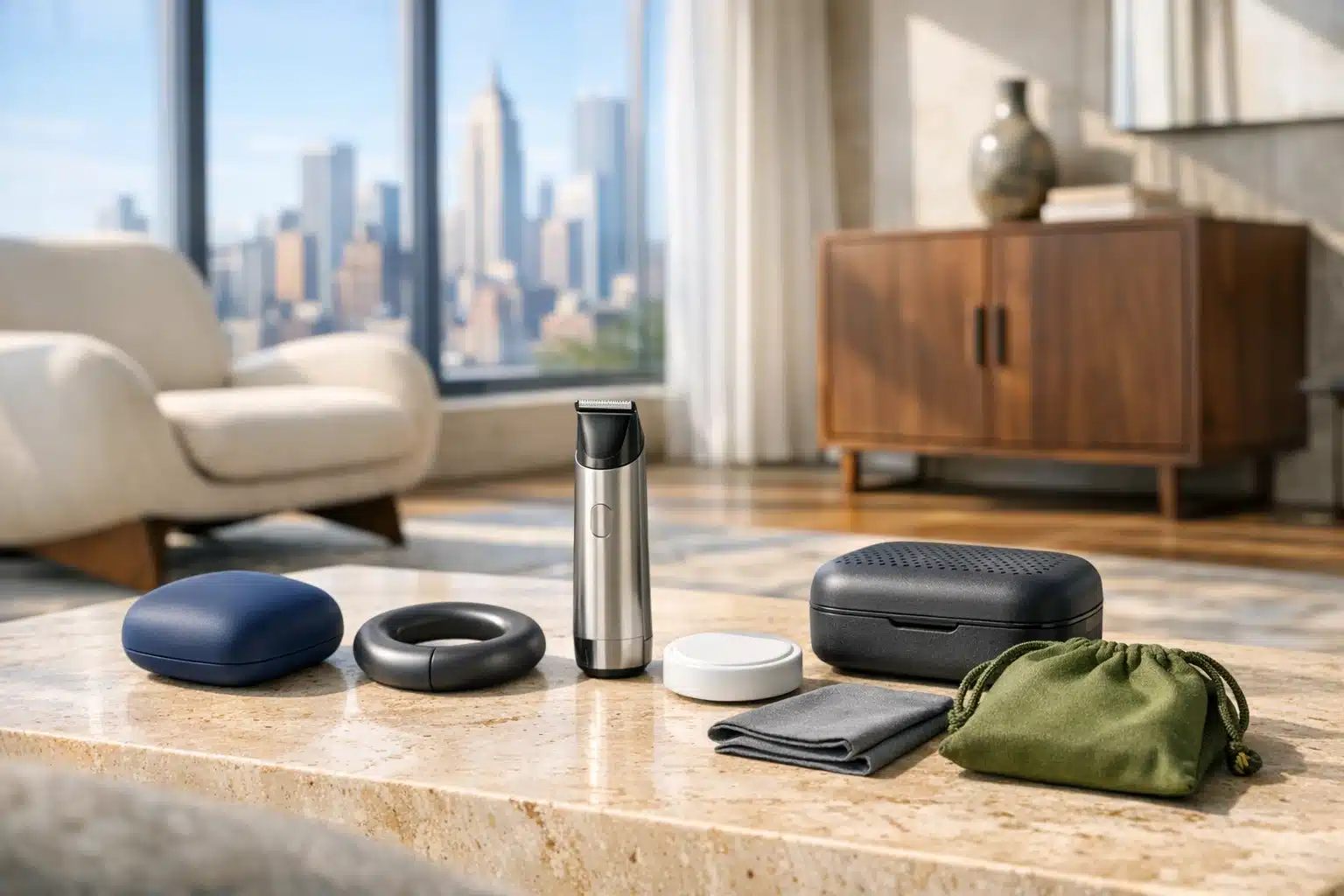
Grooming devices are the most obvious example. A well-designed body trimmer can improve comfort, simplify hygiene, and make other products easier to use. The difference between a frustrating trimmer and a reliable one often comes down to seemingly plain details: guard options, blade quality, skin protection, runtime, and how easy the head is to rinse. A waterproof model with stable battery performance can be more valuable in the long run than a cheaper device that pulls hair, overheats, or becomes dull quickly.
Cleaning and storage tools also deserve more attention than they usually get. A ventilated case, a lint-free drying cloth, and a gentle cleanser that is compatible with body-safe materials can extend product life and reduce unwanted hassle. People often focus on the initial purchase but forget that maintenance determines whether a device remains pleasant to use. Hygiene is not just a warning label at the bottom of a page; it is part of the actual ownership experience.
For men interested in health-oriented support, pelvic floor training tools and guided exercise apps sometimes enter the picture. These are different from pleasure-focused products and should be approached with realistic expectations. Some people explore them for bladder control, postural awareness, or muscle coordination, especially after speaking with a clinician. The useful point here is not that every man needs such tools, but that wellness categories overlap more than advertising language suggests.
Other adjacent tools can be surprisingly practical:
- heating pads for general muscle relaxation before stretching or recovery routines
- support cushions that improve seated comfort during long workdays
- discreet charging docks or storage boxes for privacy and organization
- travel pouches that keep personal items clean and protected
There is also a digital layer to consider. Some products now connect to apps for pattern control, reminders, or firmware updates. That convenience can be useful, but it introduces privacy questions. Buyers should look for basic signs of responsible design, such as transparent permissions, clear pairing instructions, and the ability to use a device manually if they prefer not to connect it.
The bigger lesson is simple: men’s personal health tools are often most effective when they support a routine rather than try to replace one. A trimmer, storage solution, cleanser, exercise guide, or comfort accessory may not sound flashy, yet these supporting tools often do more for daily ease than a high-concept device purchased on impulse.
Materials, Maintenance, Safety, and the Details That Matter Most
If product pages are the stage lights of this category, materials and maintenance are the backstage crew doing the real work. They determine comfort, durability, and hygiene, yet they are often buried beneath colorful names and vague claims. For buyers who want a grounded comparison, this is the section that tends to matter most.
Body-safe silicone is widely valued because it is non-porous, smooth, and generally easier to clean than softer, jelly-like blends. ABS plastic also appears frequently in external casings because it is durable, lightweight, and compatible with many modern charging designs. By contrast, highly porous materials may be less expensive but can be harder to maintain over time. That does not mean every lower-cost product is a bad purchase, but it does mean the buyer should understand the compromise being made.
Water resistance is another common source of confusion. Labels such as splash-resistant, water-resistant, and waterproof are not interchangeable. An IPX7 rating, for example, generally indicates the product can handle temporary immersion under specific conditions, while a basic water-resistant claim may mean only light exposure is safe. This matters for cleaning. People often assume a sealed charging port means full washability, when the manufacturer may recommend only careful rinsing or surface cleaning.
Battery design influences daily convenience more than many shoppers expect. Rechargeable devices often offer better long-term value and reduce waste, while disposable-battery models can be useful for travel or occasional use. Many rechargeable units in this category operate for roughly 60 to 120 minutes per charge, although power intensity, heat features, and motor size can shorten that window. Faster charging is convenient, but quiet operation and dependable runtime are often more meaningful in real life.
Before buying, a reader should look closely at these comparison points:
- material composition and whether the contact surfaces are non-porous
- cleaning method and whether internal sleeves or attachments are removable
- noise level, especially in shared living spaces
- lubricant compatibility, since silicone-based formulas may not suit every silicone surface
- warranty terms, replacement parts, and return policy clarity
Safety also includes moderation and self-awareness. Discomfort, numbness, or irritation should never be treated as a normal sign of “getting used to it.” Proper lubrication, reasonable session length, and careful cleaning are basic good practice. For anyone dealing with pain, recent surgery, ongoing pelvic symptoms, or a diagnosed condition, medical guidance is the better next step than product experimentation.
In the end, the smartest buyers often sound the least dramatic. They choose the product with the clearest instructions, the easiest cleaning routine, and the fewest question marks. In a category crowded with spectacle, ordinary reliability is often the premium feature.
Conclusion for Readers: How to Choose Without Getting Lost in the Hype
If you are the kind of reader who wants clarity more than theatrics, the good news is that male intimate wellness products become much easier to understand once you stop treating them as one giant, mysterious category. Start by naming your goal. Are you looking for simple exploration, easier maintenance, better portability, partner-friendly design, or support from adjacent health tools such as grooming and storage solutions? The answer changes what “best” means for you.
A thoughtful buying process usually begins with elimination rather than excitement. Rule out products with vague material descriptions, unclear cleaning instructions, or inflated promises that sound more like advertising fog than useful guidance. Narrow your options to a short list that fits your comfort level, living situation, and budget. Someone in a shared apartment may care deeply about noise and storage size. A frequent traveler may prioritize locking cases, charging flexibility, and compact design. A beginner may value intuitive controls far more than advanced app features.
It also helps to think in layers. The first layer is the device category itself. The second is the supporting routine around it, including hygiene, storage, lubrication compatibility, and general comfort. The third layer is honesty about how often the product is realistically going to be used. That last point is easy to ignore. Many buyers spend extra on complexity they will never fully use, when a simpler and better-built product would serve them more consistently.
For the target audience of this article, the smartest approach is calm and practical:
- choose body-safe materials over flashy gimmicks
- read cleaning instructions before purchase, not after
- match device size and feature set to your actual routine
- treat privacy, warranty support, and storage as part of the value
- separate wellness-oriented information from miracle-style marketing
There is no universal device that fits every preference, body, or budget. What there is, however, is a much better way to evaluate the field. Once you understand the main categories, the role of personal health tools, and the importance of materials and maintenance, the subject becomes less awkward and far more manageable. That is the real aim of a useful guide: not to push a fantasy of perfection, but to help readers make informed choices with more confidence and less noise.